FREE Delivery on Orders Over £35! Shop Now!

Rosemary Oil vs Minoxidil: An Honest Comparison

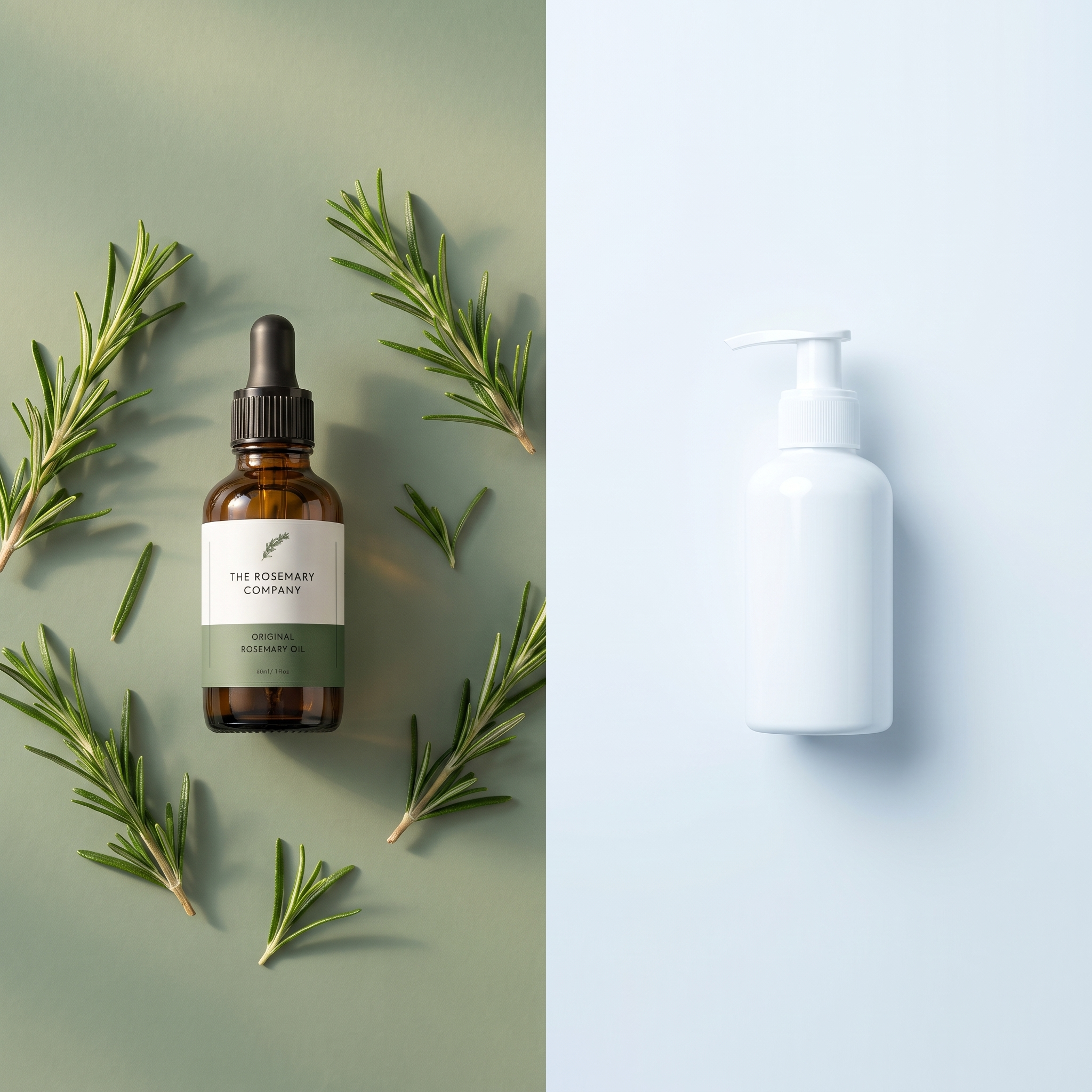
If you are weighing up Rosemary Oil against minoxidil for hair loss, here is the honest answer. Minoxidil is a proven, clinically-backed medicine, but it comes with side effects and only works for as long as you keep using it. Rosemary Oil is a gentler, natural option with promising early research. One well-known study even found the two performed comparably, though the overall evidence for minoxidil is stronger. Which is right for you comes down to what you value: clinical firepower, or a clean, low-risk approach you can stick with. Below is a fair, side-by-side look at both.
We make a Rosemary Oil, so we are not completely neutral. But we have tried to be genuinely even-handed here, because you deserve the full picture.
The short answer
Both can help with certain types of hair loss. Minoxidil has more clinical evidence behind it and can work faster, but it can cause irritation and shedding, and you have to use it indefinitely or the results reverse. Rosemary Oil is natural, gentle and low-risk, with encouraging but more limited evidence, and it works gradually. Many people who want to avoid the downsides of a medicine choose the natural route, and some use both.
What is minoxidil?
Minoxidil is an over-the-counter medicine for hair loss, sold as a liquid or foam (usually 2% or 5%) that you apply to the scalp twice a day. It was originally a blood pressure drug, and the hair-growth effect was discovered by accident. It works by prolonging the hair’s active growth phase and increasing blood flow to the follicles. It is clinically proven for pattern (androgenetic) hair loss, which is its main strength.
What is Rosemary Oil?
Rosemary Oil is a natural plant oil, best used as a blend with nourishing carrier oils and massaged into the scalp a few times a week. Rather than acting like a drug, it supports a healthy scalp environment, which is where healthy-looking hair starts. It has become popular as a gentle, clean alternative for people who would rather not use a pharmaceutical, or who found a medicine did not suit them. If you want the detail on the evidence, we covered it in Does Rosemary Oil really work for hair growth?
What the research says
Here is the part everyone asks about. A 2015 study compared Rosemary Oil against 2% minoxidil over six months in 100 people with pattern hair loss. Both groups saw a similar increase in hair count, and the Rosemary group actually reported less scalp itching. That is a genuinely encouraging result for a natural oil.
The honest caveat now. Minoxidil has been studied far more extensively and over longer periods, so its evidence base is stronger and broader. Rosemary Oil’s research is promising but thinner. So the fair summary is this. Rosemary Oil shows real potential and matched 2% minoxidil in one head-to-head study, but minoxidil remains the more clinically established option.
Side effects and downsides
Minoxidil:
- Scalp irritation, itching, dryness and flaking are common, especially with the liquid (the foam is often gentler).
- An initial burst of shedding, sometimes called the “dread shed,” is common in the first weeks. It usually settles, but it can be alarming while it lasts.
- If it runs onto the face it can cause unwanted hair growth.
- The big one: you have to keep using it. Stop, and the hair you regrew typically falls out over the following months, back to where you started.
Rosemary Oil:
- Generally very well tolerated. The main sensible precautions are a patch test first, and diluting essential oil in a carrier oil (or simply using a ready-made blend).
- It works gradually, so it asks for patience rather than causing side effects.
- You are not locked in. It is a supportive part of a routine, not a medicine your scalp comes to rely on.
The “do I have to use it forever?” question
This is often the deciding factor. Minoxidil only works while you use it, and stopping usually reverses the gains within a few months. Rosemary Oil does not work that way. It is not a drug your scalp becomes reliant on, so it fits more naturally into a long-term, low-pressure routine. For a lot of our customers, avoiding that lifelong-commitment feeling is exactly why they went natural.
Rosemary Oil vs minoxidil, side by side
| Rosemary oil | Minoxidil | |
|---|---|---|
| What it is | Natural plant oil (best as a blend) | Over-the-counter medicine (2% or 5%) |
| How it works | Supports a healthy scalp | Prolongs the growth phase, boosts blood flow |
| Evidence | Promising, matched 2% minoxidil in one study | Stronger and more extensively studied |
| Speed | Gradual, think months | Can be faster, but with early shedding |
| Side effects | Rare, generally gentle | Irritation, shedding, possible unwanted hair |
| Ongoing use | Flexible, no dependency | Must continue or the gains reverse |
| Best for | A clean, low-risk, natural approach | A clinically-proven medicine, if you accept the trade-offs |
So, which should you choose?
There is no single right answer, only the right answer for you.
- If you want the most clinically proven option and you are comfortable with the side effects and the ongoing commitment, minoxidil is the established choice.
- If you would rather take a gentle, natural, low-risk approach, are happy to be patient, and like the idea of something you are not tied to for life, Rosemary Oil is a lovely place to start.
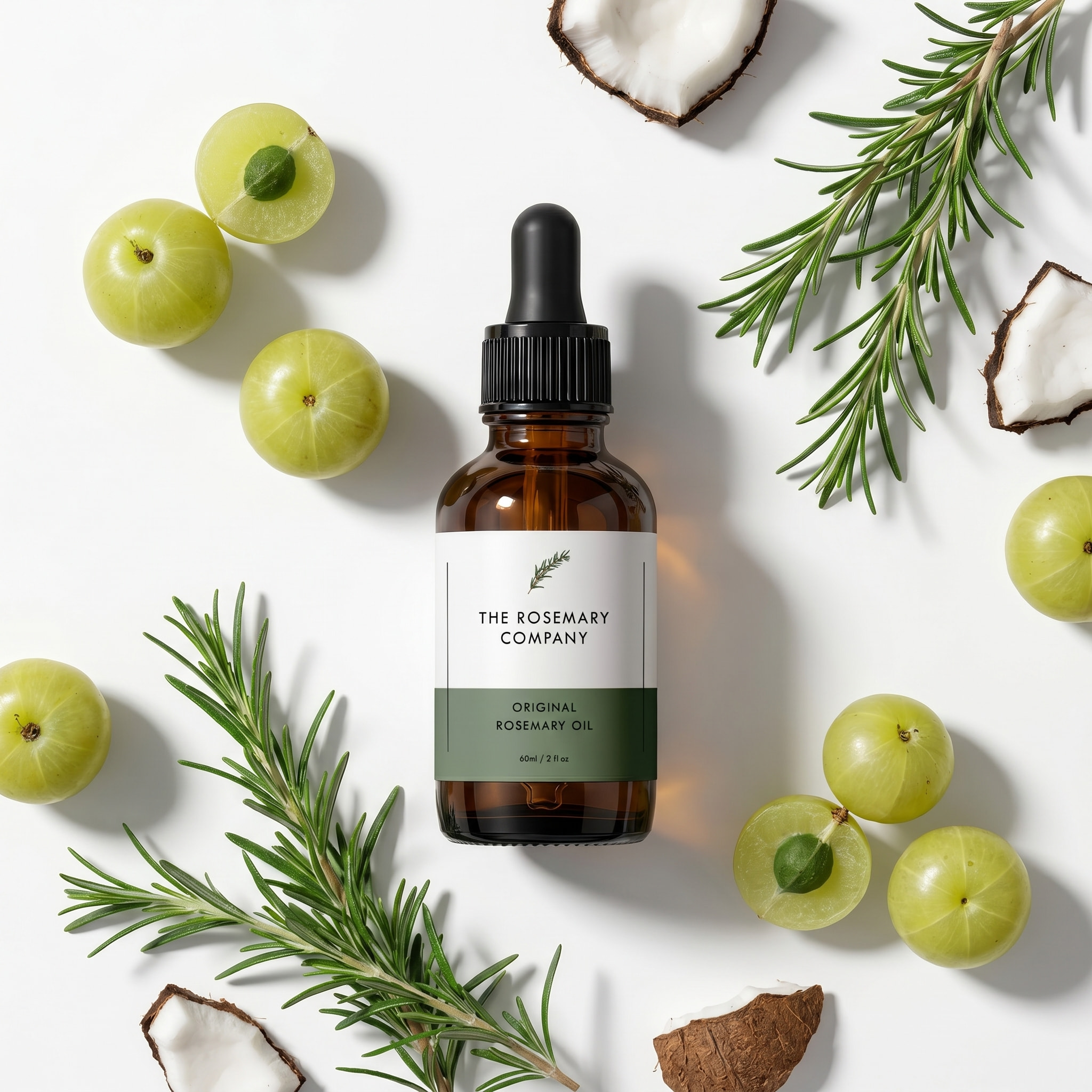
If the natural route appeals, our Original Rosemary Oil is a clean, 13-ingredient blend with over 1,700 reviews and a 180-day money-back guarantee, so you can try it with nothing to lose. And if you are not sure how to use it, here is our simple guide.
Frequently asked questions
Is Rosemary Oil as good as minoxidil?
In one 2015 study, Rosemary oil matched 2% minoxidil for hair count over six months, with less scalp itching. That said, minoxidil has a stronger overall evidence base. Rosemary Oil is a promising, gentler alternative rather than a proven like-for-like replacement.
Can you use Rosemary Oil and minoxidil together?
Many people do, using Rosemary Oil as a natural scalp treatment alongside minoxidil. There is no obvious conflict, but since minoxidil is a medicine, check with your GP or pharmacist first.
Does Rosemary oil have side effects like minoxidil?
Rosemary Oil is generally very well tolerated, with far fewer reported side effects than minoxidil. Do a patch test first, and always dilute essential oil in a carrier oil or use a ready-made blend.
What happens if you stop using minoxidil?
Minoxidil only works while you use it. If you stop, the hair you regrew usually sheds over the following months and returns to your natural baseline. Rosemary oil does not create this kind of dependency.
Which is better for hair loss, Rosemary Oil or minoxidil?
It depends on what you want. Minoxidil is more clinically proven but comes with side effects and a lifelong commitment. Rosemary Oil is gentler, natural and low-risk, with promising evidence. Many people who want to avoid the downsides of a medicine prefer the natural route and choose our Original Rosemary Oil.
Written by Asif & Faz, founders of The Rosemary Company. We started the brand after Faz’s own experience with post-partum hair loss left her frustrated with the over-hyped, chemical-filled products on the shelves, so we made the clean, honest product we wished we’d had.
Sources: Panahi et al., 2015 (Skinmed) · Cleveland Clinic (rosemary oil) · Healthline (minoxidil)



One thought on “Rosemary Oil vs Minoxidil: An Honest Comparison”
Comments are closed.