FREE Delivery on Orders Over £35! Shop Now!

Hair Thinning During Menopause: Why It Happens and What Actually Helps

If your hair has started thinning during menopause or perimenopause, here is what is going on and what you can do. As oestrogen and progesterone decline, hair spends less time in its growth phase and follicles become more sensitive to hormones that gradually shrink them, so hair sheds a little more and grows back a little finer. It affects roughly 40 to 50% of women, so if you are noticing a wider parting, a thinner ponytail or more hair in the brush, you are far from alone. The encouraging part: there is a sensible, layered set of things that genuinely help, from simple routine changes to medical options via your GP. Here is the honest picture.
First, you are not alone (and it is not your fault)
This is one of the least talked-about parts of menopause, and one of the most emotionally loaded. Hair is tied up with how we feel about ourselves, and watching it thin can knock your confidence in a way that is hard to explain to anyone who has not been through it. Around 40 to 50% of women experience noticeable hair changes through menopause, yet most people never mention it. So before anything practical: this is common, it is hormonal rather than anything you did wrong, and there are things you can do.
Why menopause causes hair thinning
The short version is hormones. A little more detail, because understanding it genuinely helps:
- Oestrogen keeps hair in its growth phase. Every hair on your head cycles between growing, resting and shedding. Oestrogen holds hair in the growing phase for longer, which is why many women notice their thickest hair during pregnancy, when oestrogen is high. As oestrogen falls through perimenopause and menopause, more hairs move into resting and shedding sooner.
- Falling progesterone tips the balance toward androgens. With less oestrogen and progesterone around, the small amounts of androgens (so-called male hormones that all women naturally produce) have relatively more influence. Hair follicles that are sensitive to these hormones gradually miniaturise, producing finer, shorter hairs over time. Doctors call this female pattern hair loss.
- The pattern is diffuse. Unlike male balding, menopausal thinning usually shows as overall reduced density: a wider parting, thinning at the crown and temples, a ponytail that feels slimmer. Complete bald patches are not typical (if you have distinct bald patches, see your GP, as that points to something different).
One more honest note. Menopause is not the only possible cause. Low iron, thyroid changes, stress and some medications can all thin hair too, and they are treatable, which is exactly why the first step below matters.
What actually helps
There is no single fix, and anyone who promises one is overselling. What works is layering several sensible things and giving them time.
1. Start with your GP
If your hair change has been noticeable, a GP visit is genuinely worth it. They can check the treatable look-alikes (iron, ferritin, thyroid, vitamin D) and talk you through medical options. HRT helps some women with a range of menopause symptoms, and because it restores oestrogen it can support hair for some, but it is a personal medical decision to make with your doctor, not something to start for hair alone. This is also where prescription advice on hair-specific treatment sits.
2. Know the medical option: minoxidil
The established over-the-counter medicine for female pattern hair loss is minoxidil. It has the strongest clinical evidence, and it also comes with real trade-offs: possible scalp irritation, an initial shedding phase, and the results only last while you keep using it. We wrote an honest side-by-side comparison here: Rosemary Oil vs Minoxidil. Some women choose it, some prefer to avoid the commitment and side effects, and both are legitimate choices.
3. Look after the scalp your hair grows from
This is where the natural route earns its place. Healthy-looking hair starts with a healthy scalp, and a consistent scalp-care routine is a gentle, low-risk foundation whatever else you decide:
- A Rosemary Oil scalp treatment 2 to 3 times a week. Rosemary Oil is the best-researched natural option. One study found it performed comparably to 2% minoxidil over six months, with less scalp itching. We covered the full evidence honestly in Does Rosemary Oil really work for hair growth? A few minutes of scalp massage as you apply it is a lovely habit in itself. (Here is exactly how to use it.)
- A gentle, sulphate-free wash. Harsh shampoos strip an already-changing scalp. Here is what to look for.
4. Be kind to the hair you have
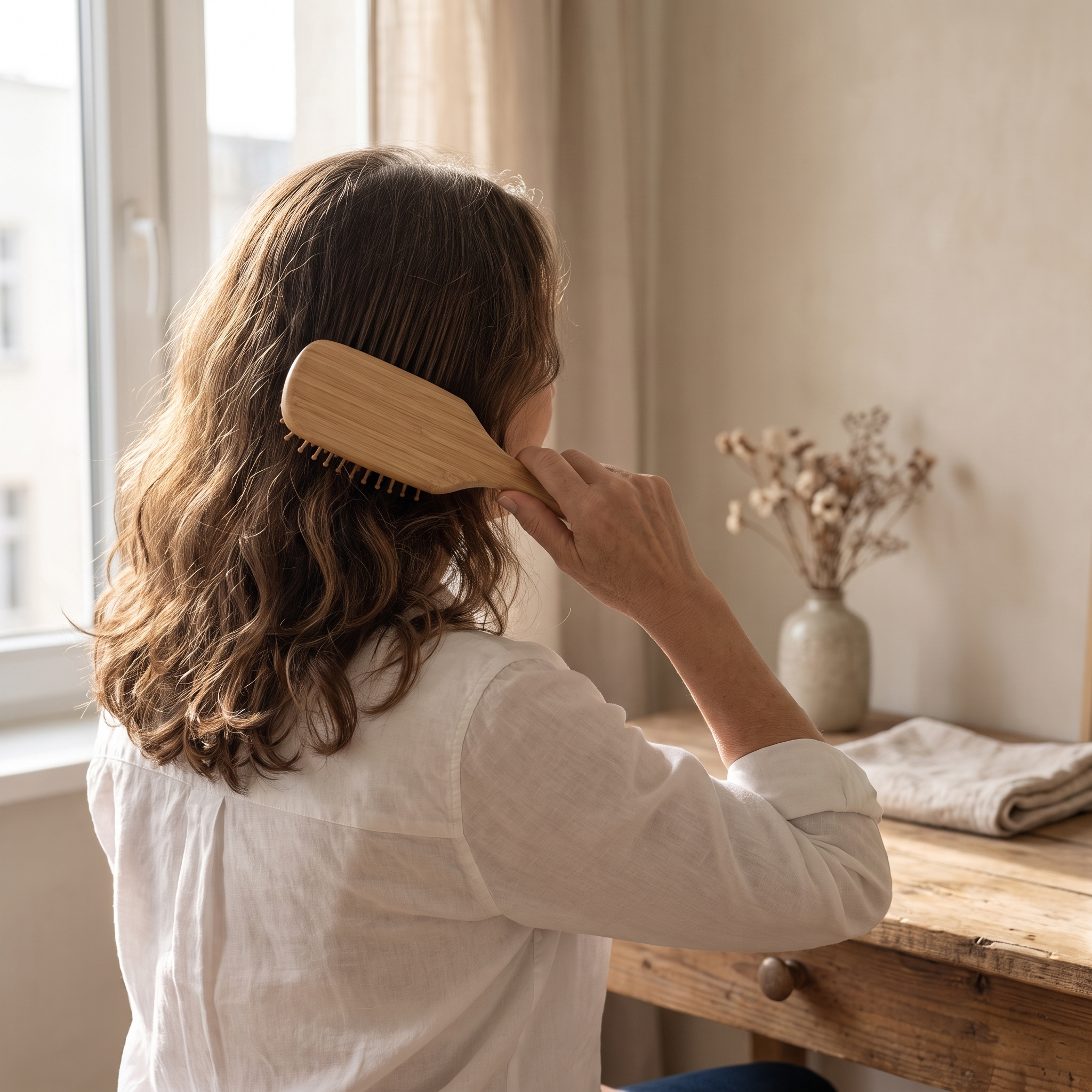
Thinner hair is more fragile, so small habits add up: a gentle brush (wooden or bamboo rather than harsh plastic), less heat styling, avoiding tight ponytails and buns that pull at the roots, and washing with warm rather than hot water.
5. Feed it from the inside
Nothing exotic required: enough protein (hair is made of it), iron-rich foods, and plenty of fruit and vegetables. If your diet has gaps, your GP can check whether a supplement is actually needed rather than guessing.
6. Manage the amplifiers
Stress and poor sleep both push more hairs into the shedding phase, and menopause can disrupt both. Anything that genuinely helps you rest, from walking to yoga to simply asking for more support, quietly helps your hair too.
What our customers tell us
Results vary from person to person, and none of this is overnight. But menopausal thinning is the single most common reason women find us, and the feedback keeps us going:
“Since menopause my scalp has been very irritable and my hair was thinning in places. I’m on my second bottle and it’s definitely calmed my scalp.” — Jo
“I bought these because my hair was suffering from perimenopause, thinning, falling out. My hair feels full and thick after 1 month and the amount falling out is almost none.” — Michela
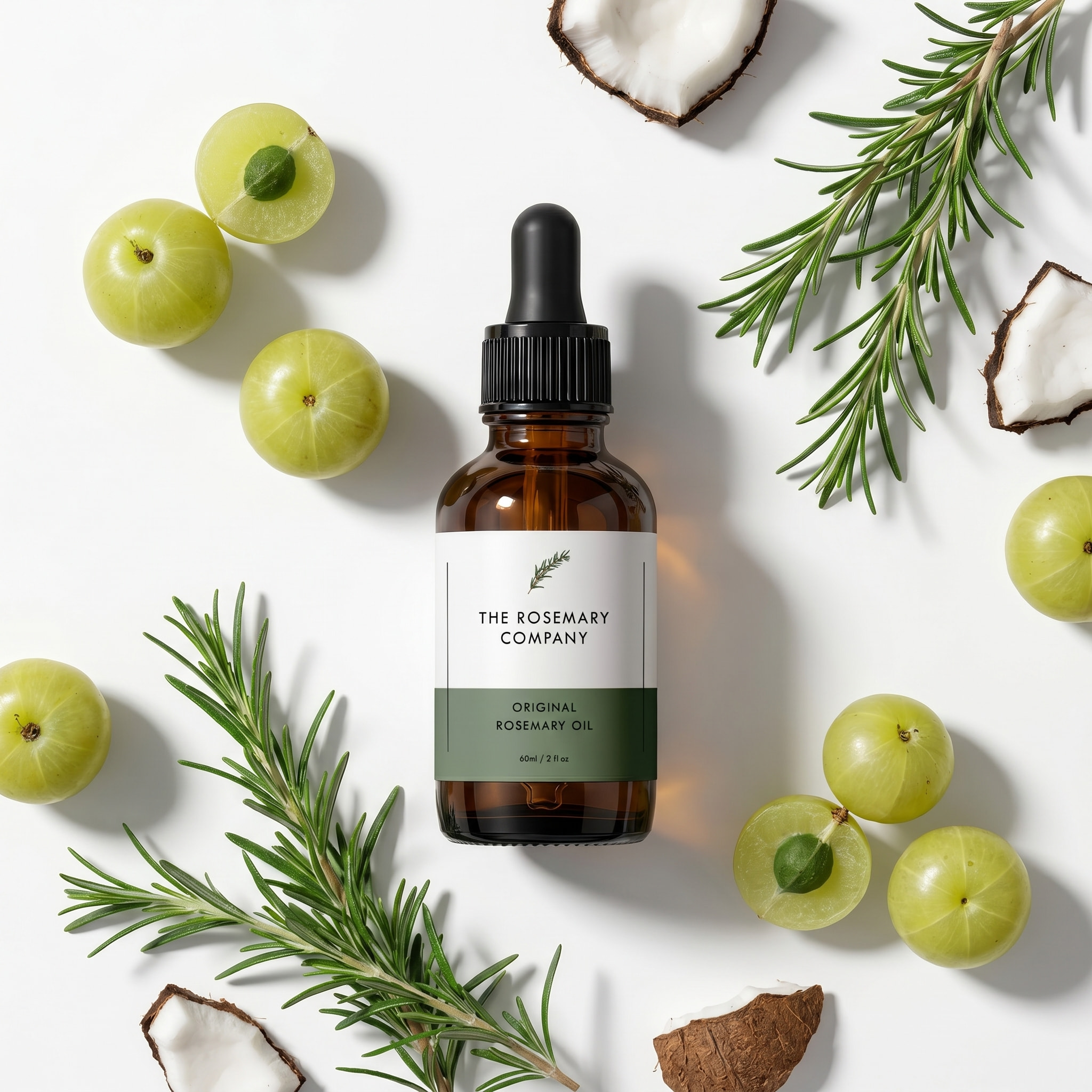
Individual experiences, honestly reported. If you would like to try the natural route, our Original Rosemary Oil is a clean, 13-ingredient blend with over 1,700 reviews and a 180 day money-back guarantee that covers opened bottles, so you can give it a proper go with nothing to lose.
The honest timeline
Whatever combination you choose, think in months. Softer, more manageable hair tends to come first, calmer shedding over the following couple of months, and any visible change in fullness typically takes four to six months of consistency. Menopausal hair change happened gradually, and improving how your hair looks and feels is gradual too.
Frequently asked questions
Is hair thinning during menopause normal?
Yes, very. Around 40 to 50% of women notice hair thinning or increased shedding through perimenopause and menopause. It is driven by declining oestrogen and progesterone, not by anything you have done wrong.
Does menopausal hair thinning stop?
The most active shedding often settles as hormones stabilise after menopause, but the underlying tendency to finer hair does not fully reverse on its own, which is why a consistent routine and, where appropriate, medical support make a difference.
Can hair thickness improve after menopause?
Many women see their hair’s look and feel improve with a layered approach. Scalp care, gentle handling, good nutrition and, for some, medical treatment via their GP. Expect gradual change over months rather than a quick fix.
Does HRT help with menopausal hair loss?
It can support hair for some women because it restores oestrogen, but responses vary and HRT is a broader medical decision to make with your GP, not something to start for hair alone.
Is Rosemary Oil good for thinning hair during menopause?
It is the best-researched natural option. One study found Rosemary Oil performed comparably to 2% minoxidil over six months, with less irritation. It supports a healthy scalp as part of a consistent routine, and it suits women who prefer a gentle, natural approach without a medicine’s side effects.
When should I see a doctor about hair loss?
If thinning is sudden, patchy, or accompanied by other symptoms, or you simply want clarity, see your GP. Iron, thyroid and vitamin D issues can all thin hair and are treatable once identified.
Written by Asif & Faz, founders of The Rosemary Company. We started the brand after Faz’s own experience with post-partum hair loss left her frustrated with the over-hyped, chemical-filled products on the shelves, so we made the clean, honest product we wished we’d had.
Sources: Menopause, skin and common dermatoses: hair disorders (PMC review) · My Menopause Centre: hair changes · Panahi et al., 2015 (Skinmed)